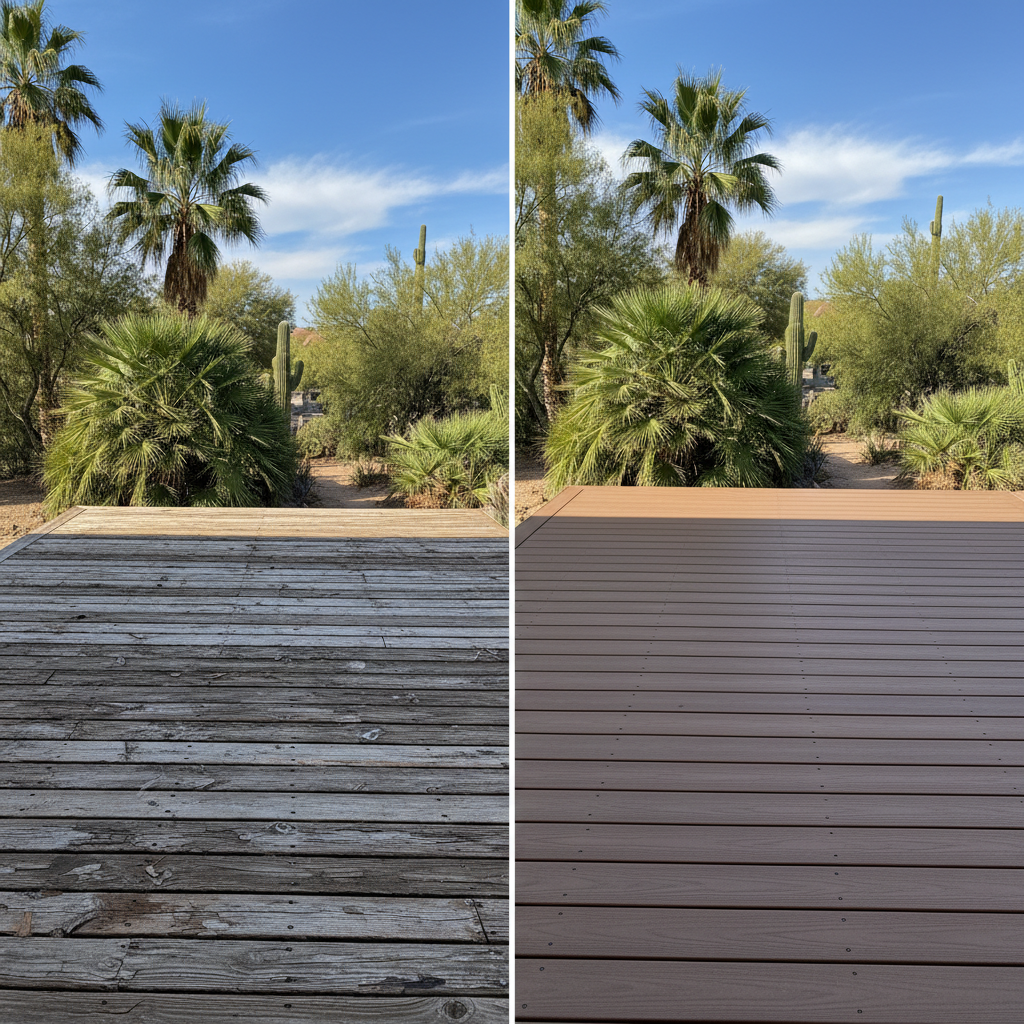
Alright, let's talk composite decks. A lot of folks around Scottsdale are looking at them because, let's face it, wood decks take a beating out here. But when you start digging into composite, you'll quickly run into two main types: capped and uncapped. What's the deal with each, and which one's actually right for your backyard?
Uncapped Composite: The Original
Uncapped composite was one of the first options out there, and it's basically a mix of wood fibers and plastic resin, molded into boards. It was a big step up from wood in terms of maintenance, no doubt.
The Good
- Cost: Generally, uncapped composite is going to be your cheaper option upfront. If budget is your absolute top priority and you're still wanting to avoid wood, it's something to consider.
- Looks: It can look pretty good when it's new, often mimicking the grain of natural wood.
The Not-So-Good (Especially for Arizona)
- Staining: This is the big one. Because it's still got those exposed wood fibers, uncapped composite can stain. Think about a spilled glass of red wine, or even just dirt and grime getting ground in. It's porous, so those stains can really set in.
- Fading: The Arizona sun is relentless. Uncapped boards will fade over time, and not always evenly. You'll see that color dull out, sometimes pretty quickly, which takes away from that initial nice look.
- Mold/Mildew: Even though it's composite, those exposed wood fibers can still be a breeding ground for mold and mildew, especially if you've got a pool deck that stays damp or a shady spot where water collects. You'll be scrubbing it more often than you'd think.
- Scratching: It's not as tough as you might hope. Furniture, pet claws, or even just dragging things across it can leave noticeable scratches.
Honestly, for a place like Scottsdale, with our intense sun and the dust we deal with, I don't recommend uncapped composite much anymore. It just doesn't hold up to our conditions the way people expect a 'low-maintenance' deck to.
Capped Composite: The Evolution
Capped composite is the newer, improved version. It's got that same wood fiber and plastic core, but then it's wrapped in a durable, protective polymer shell on at least three sides (sometimes all four). Think of it like a candy bar with a hard shell. That shell makes all the difference.
The Good (And Why It's Better for AZ)
- Stain Resistance: This is where capped composite shines. That polymer cap creates a non-porous surface. Spilled BBQ sauce? Muddy footprints? Most things just wipe right off. This is huge for outdoor living in Scottsdale, where we're always entertaining and dealing with dust.
- Fade Resistance: The cap is engineered to resist UV rays. While no material is truly 'fade-proof' under our sun, capped composites hold their color significantly better and longer than uncapped. You'll keep that rich look for years.
- Mold/Mildew Resistance: No exposed wood fibers means nowhere for mold and mildew to take hold. A quick rinse is usually all it takes to keep it clean, even around a pool.
- Scratch Resistance: The cap provides a much tougher surface, making it far more resistant to scratches and scuffs. This is great for families with kids, pets, or anyone who actually uses their deck.
- Appearance: Manufacturers have gotten really good at making capped composite look incredibly realistic. You can get boards that mimic exotic hardwoods, with deep, varied grain patterns and multi-tonal colors that look fantastic.
The Not-So-Good
- Cost: Capped composite is more expensive upfront than uncapped. There's no getting around that. You're paying for that advanced technology and durability.
- Heat Retention: Some darker capped composite boards can get pretty hot under direct sun, just like any dark surface out here. Lighter colors or boards with specialized cooling technology can mitigate this, but it's something to be aware of if you're planning to walk barefoot across it in July.
My Recommendation for Scottsdale Homeowners
Look, if you're building a deck in Scottsdale, you're investing in your home and your outdoor lifestyle. You want something that's going to last and look good without becoming another chore. For that reason, I almost always recommend capped composite decking.
The slightly higher upfront cost is absolutely worth it for the drastically reduced maintenance and superior longevity you'll get, especially with our intense Arizona climate. You won't be scrubbing stains, worrying about fading, or dealing with mold. You'll spend more time enjoying your deck and less time working on it.
We've installed plenty of both types over the years, from Paradise Valley to North Scottsdale, and I've seen firsthand how uncapped just doesn't stand up to our sun and dust storms over time. Capped composite, on the other hand, holds its own. When we build a deck, whether it's a small patio extension or a full outdoor living space, we want it done right. That's why at Done Right Decks of Scottsdale, we steer our clients towards materials that we know will perform best for them in the long run.
You're building a deck to relax on, not to maintain. Go with capped composite; you won't regret it.