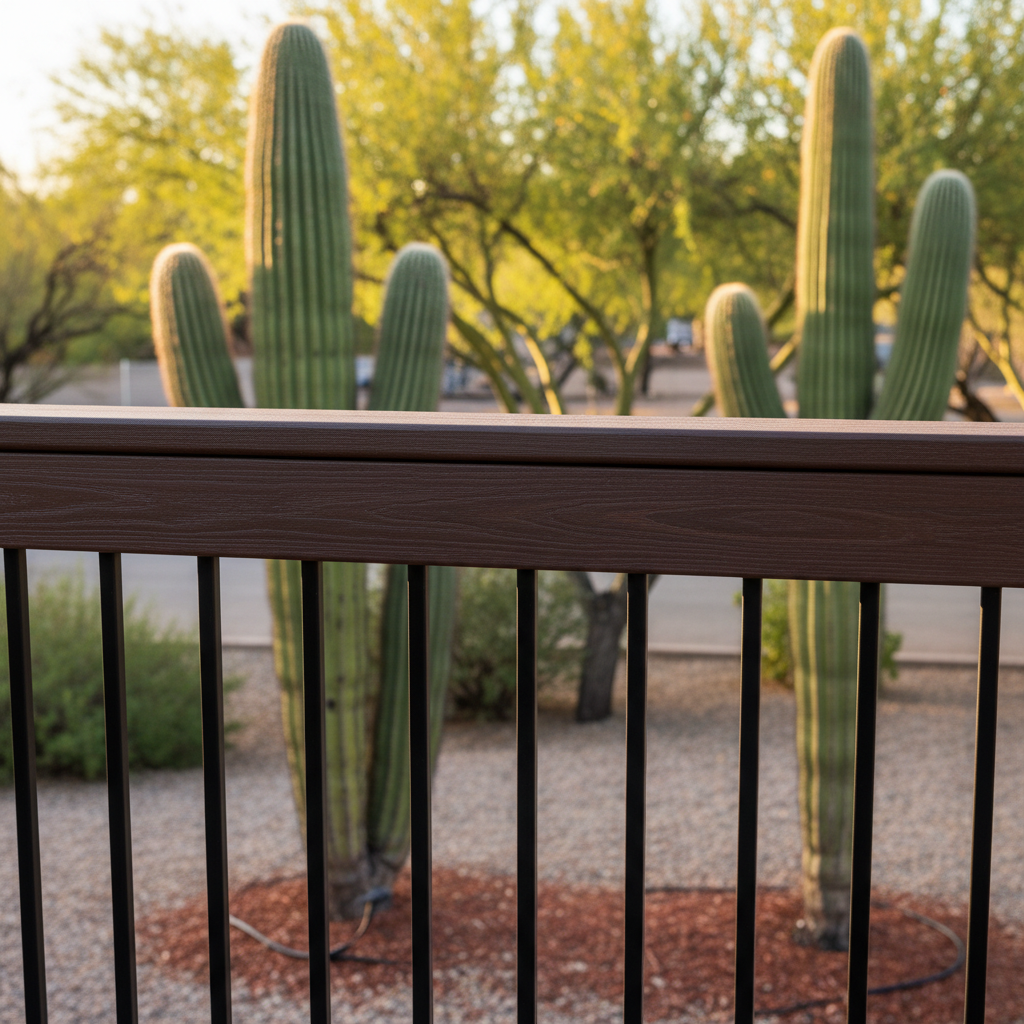
Do I even need a railing on my deck?
That's a question I hear a lot, especially from folks with ground-level decks. The short answer? It really depends on how high your deck is. Building codes, which we absolutely have to follow here in Scottsdale, generally say you need a railing if any part of your deck surface is 30 inches or more above the ground or grade. This measurement applies to any spot within three feet horizontally of the deck's edge. That 30-inch rule is pretty standard everywhere. Even if your deck is just under that threshold, sometimes I'll still suggest one, especially if you've got kids or pets running around. It's just safer, you know? Plus, a well-designed railing really finishes off the look of a deck, don't you think?
What are the best materials for deck railings in Scottsdale's climate?
Our desert climate is brutal on just about everything, and deck railings are no different. We're talking intense sun, scorching heat, and those occasional heavy monsoon downpours. Wood railings look fantastic, but they demand a lot of upkeep – staining, sealing, checking for splinters. If you pick wood, make sure it's a durable species and you're ready for the maintenance. For something low-maintenance, composite railings are a fantastic choice. They're built to resist fading, rot, and insects, which is a huge benefit out here. Aluminum is another solid contender; it's light, strong, and won't rust. Glass panels offer unobstructed views, perfect if you're lucky enough to have a great mountain or city vista. Steel, especially powder-coated, is also super tough. Honestly, for most Scottsdale homeowners, I usually point them toward composite or aluminum for the best mix of good looks, durability, and minimal fuss.
How tall does my deck railing need to be?
Again, this all comes back to the building code. For residential decks, the top of the guardrail typically needs to be at least 36 inches above the deck surface. If your deck is really high off the ground, though — say, on a second story or a raised patio overlooking a wash — the code might actually call for 42 inches. It's all about preventing falls, obviously. We always double-check the current Scottsdale building codes before we even start a job to make sure everything's up to snuff. You certainly don't want to pass inspection only to discover later that your railing is too short.
Are there specific spacing requirements for railing pickets or balusters?
Yep, absolutely. This is another big safety thing, especially when kids are involved. The general rule is that a 4-inch sphere shouldn't be able to pass through any opening in your railing. That means the space between your pickets or balusters can't be more than four inches wide. This rule also applies to any decorative cutouts or gaps in the railing design itself. It's a critical safety measure designed to stop small children from squeezing through or getting their heads stuck. When we're building railings at Done Right Decks of Scottsdale, we're super precise with these measurements.
Can I install a railing myself, or should I hire a professional?
Look, I'm all for DIY projects when they make sense. If you're just replacing a single picket or doing some minor repair, go for it. But installing an entire deck railing system? That's a whole different animal. There are so many things to consider: code compliance, structural integrity, proper fastening, and getting everything perfectly plumb and level. A poorly installed railing isn't just an eyesore; it's a serious safety hazard. If it fails, someone could get seriously hurt. Unless you have a lot of carpentry experience, all the right tools, and a deep understanding of building codes, I'd strongly suggest hiring a professional. We do this every single day, we know the codes inside and out, and we've got the experience to make sure it's both safe and looks fantastic.
What kind of maintenance do deck railings need in the desert?
Maintenance really depends on what material your railing is made from. Wood railings need the most attention. You'll want to clean them regularly, check for splinters, and reapply stain or sealant every few years to protect against the sun and keep them from drying out. Composite railings are much easier; a simple wash with soap and water usually does the trick. You might need to scrub a bit more if you get a lot of dust or pollen, which is pretty common here in Scottsdale, especially with all the landscaping around. Aluminum and steel railings are also quite low maintenance – just keep them clean. Even with materials that don't need much, it's still a good idea to do a quick visual inspection once a year. Check for loose fasteners, wobbly posts, or any signs of wear. Catching small issues early can save you bigger headaches down the road, believe me.
What if my deck is on uneven ground, like a slope or a terraced yard?
Uneven ground definitely makes railing installation more complicated. If your deck is on a slope, the 30-inch height rule applies to the grade directly below the deck. So, one side might be well over 30 inches, while another side is just a few inches. This means you'll probably need a railing along the higher sections. For terraced yards, you might have different deck sections at varying heights, each needing its own railing assessment. We often have to get pretty creative with how the posts are anchored and how the railing transitions between different levels or follows a grade. It's not usually a problem, but it demands careful planning and precise measurements to ensure both safety and a consistent, good-looking result. It's definitely not a one-size-fits-all situation, and that's where experience really counts.