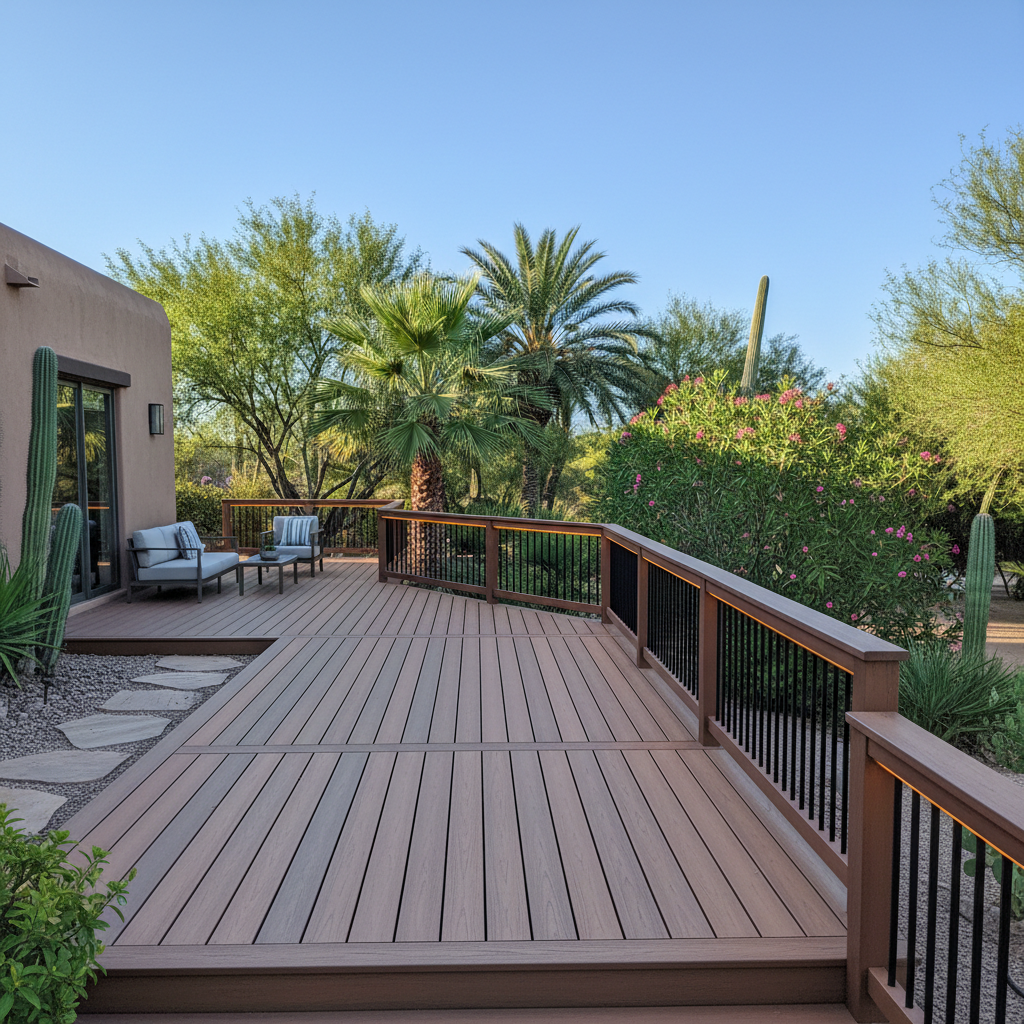
So, you've got a Trex deck, or maybe you're thinking about one. Honestly, that's a smart choice for Scottsdale. They're tough, they don't need much upkeep, and they look really good. But "low-maintenance" isn't the same as "no-maintenance," especially not out here in the Sonoran Desert. Our climate throws some real curveballs, and knowing the right time for certain things can save you a lot of headaches, keeping your deck sharp for years to come.
When's the Best Time to Build a New Trex Deck?
This is probably the question I hear most often. Everyone wants their new outdoor space ready for prime entertaining season, right? For a Trex deck installation, I always tell folks the "shoulder seasons" are your best bet. That means late fall, winter, and early spring.
Why then? Well, there are a few good reasons:
- The heat. Trying to lay composite decking in 110-degree summer heat isn't just brutal for my crew; it can actually affect the material itself. Trex is designed for extreme temperatures, sure, but working with it when it's super hot means it expands more. If you install it at its maximum expansion, you might end up with gapping issues when it cools down significantly later in the year.
- Moisture. We don't get much rain, but when it does come, it's usually during monsoon season in July and August. While Trex itself is waterproof, building on wet ground or dealing with sudden downpours can slow down the foundation work and turn the job site into a muddy mess.
- Scheduling. Most people want their decks finished in the spring so they can use them all summer. If you wait until spring to call, you're usually waiting in line. Planning in the fall or winter means you're ahead of the rush, and we can often get to your project much sooner. Plus, you'll be ready to enjoy it the moment the weather warms up.
So, if a new deck is on your mind, give Done Right Decks of Scottsdale a call around October or November. We can get it planned out, and you'll be enjoying it by February or March.
How Does Scottsdale Weather Affect Trex Deck Work?
Our weather here is a huge factor for any outdoor construction. For Trex, it mostly comes down to those big temperature swings and that intense sun.
- Extreme Heat: I mentioned this before, but it's worth repeating. The material's expansion and contraction is something we factor into every single installation. We use specific gapping techniques and fasteners made for composite decking to allow for this movement. If you've ever seen a composite deck with buckling or uneven gaps, it's often because this wasn't handled correctly during installation—especially if it went in during a super-hot stretch.
- UV Exposure: Our sun is no joke. Trex is built with UV inhibitors, which is why it holds its color so well compared to wood. But even the best materials can show some wear over decades. This isn't usually an issue during installation, but it's precisely why you want a quality product like Trex in the first place.
- Dust and Wind: We get a lot of dust, particularly during haboobs. While this doesn't stop construction, it means we're often cleaning surfaces before we fasten them, and it can make for a less pleasant work environment for my crew. It also means your brand-new deck might need a quick rinse after a big dust storm, even before you officially start using it.
Year-Round Protection for Your Trex Investment
Okay, so you've got your beautiful Trex deck. How do you keep it looking that way? It's pretty straightforward, but being consistent is key.
- Regular Cleaning: This is probably the most important thing you can do. Our dust and grit can be abrasive. A simple sweep with a soft-bristle broom and a rinse with a hose every few weeks goes a long way. For tougher spots, like spilled BBQ sauce or tree sap, a mild soap and water solution with a soft brush usually does the trick. Just don't use harsh chemicals or pressure washers above 3100 PSI, and always test in an inconspicuous spot first, alright?
- Monitor for Debris: Leaves, especially from mesquite trees, can stain if they're left to decompose on the surface, even on Trex. Same goes for pet waste. Clean it up promptly.
- Furniture Pads: If you've got heavy patio furniture, especially metal, put felt or rubber pads under the legs. This prevents scratches and scuffs. Our concrete patios in Scottsdale are tough on furniture, and that furniture can be tough on your deck.
- Snow (if we ever get it!): Look, it's rare, but if you're up in Fountain Hills or Cave Creek and get a dusting, use a plastic shovel, not metal, to clear snow.
- Shade Structures: Think about adding a pergola or sail shade over parts of your deck. While Trex handles the sun just fine, reducing direct, intense UV exposure over time can only help preserve its color and surface. Plus, it makes your deck a lot more comfortable to use during those long summer afternoons.
A Trex deck is a fantastic addition to any Scottsdale home. With a little seasonal smarts and consistent care, you'll be enjoying your outdoor living space for decades. If you've got questions or are ready to talk about a new project, don't hesitate to reach out to us at Done Right Decks of Scottsdale. We're here to help.